Surveillance in emergencies

Surveillance in emergencies

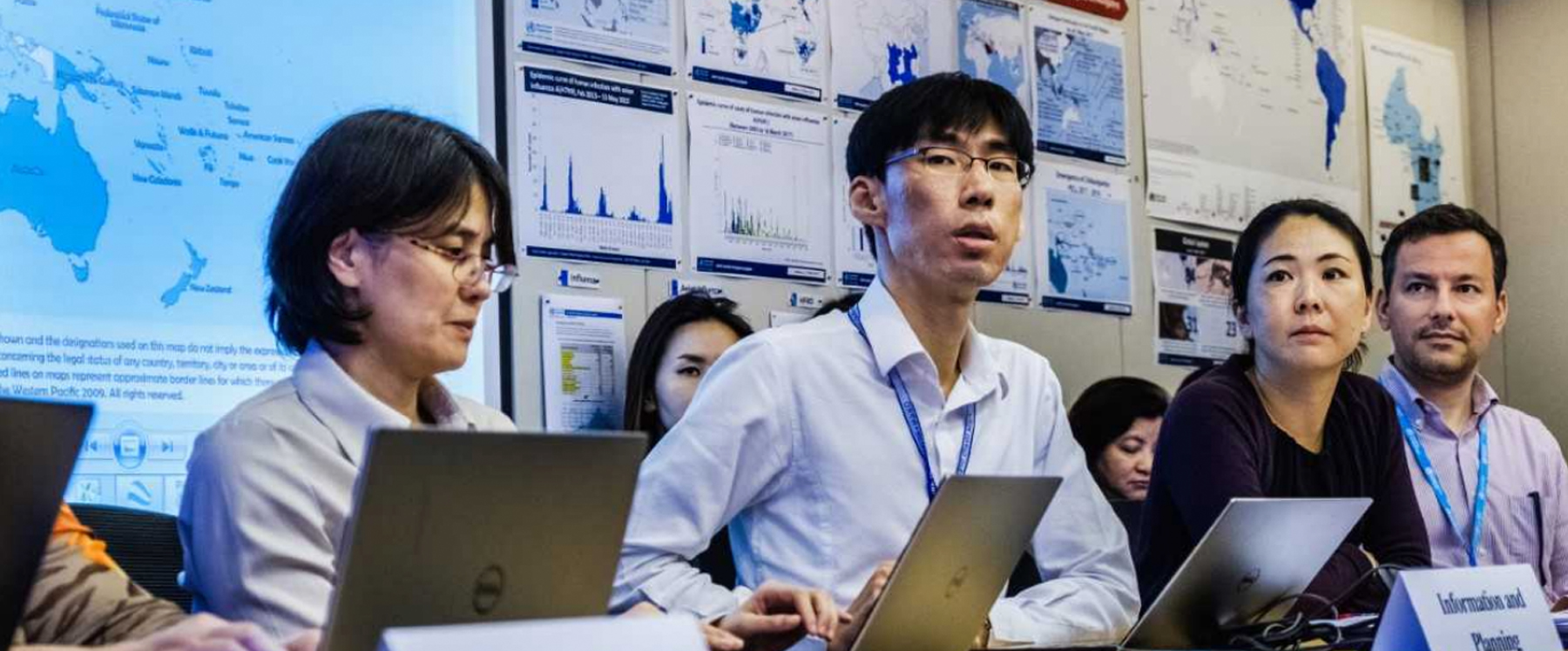
WHO/Y. Shimizu
© Credits

The Western Pacific Region, being the most diverse region in the World, is beset by unique public health challenges and is considered a hotspot for outbreaks and emerging and re-emerging infectious diseases, such as SARS, MERS, avian influenza, Zika and dengue.  

Furthermore, recurrent natural disasters and extreme weather events can increase vulnerability to infectious diseases and other health conditions. Effective disease surveillance is critical to detect disease outbreaks quickly before they spread, cost lives and become difficult to control.  

Public health surveillance is the systematic, ongoing collection, collation and analysis of data for public health purposes and the timely dissemination of public health information for assessment and public health response, as necessary. Public health intelligence builds on surveillance by integrating multiple information sources for assessing, interpreting and generating a wide range of information for actionable insights; and disseminating them for informed and effective decision-making to protect and improve the health of the population.  

Public health intelligence

WHO's Health Emergencies Programme leverages an all-hazards lens to detect, verify, assess, notify/report, and respond to health emergency events and disease outbreaks in the Western Pacific region. WHO works closely with countries around the world to collect health information, analyze outbreak trends, and share intelligence and response strategies.  

regional-preparedness

Regional surveillance and signal management 

WHO uses AI technologies to scan about 10,000 pieces of information every week in our region, allowing us to detect potential threats earlier and assess risks more quickly. In 2025, our region’s scanning systems identified close to 2000 signals (potential public health emergencies) and managed 81 new events. All of this is aimed at strengthening early warning and response. 


Situation analysis and risk assessments 

By monitoring high-threat diseases on an ongoing basis, WHO is able to identify and respond to outbreaks early and to guide public health decision-making. WHO currently monitors three high-threat diseases in the Western Pacific Region: respiratory viruses, avian influenza and dengue.


Information sharing 

Through tools, including the Event Information Site (EIS) and Disease Outbreak News (DON) reports, WHO shares urgent information regarding confirmed or potential acute public health events of concern across all hazards. EIS posts are targeted at informing National IHR Focal Points and can serve as the precursor to DONs which are available to the public. These notifications ensure that member states are aware of emerging diseases, epidemics, and other public health concerns in compliance with the  International Health Regulations (2005).  
Avian Influenza A(H5N1) - Cambodia

Between 1 January and 1 July 2025, the World Health Organization (WHO) was notified by Cambodia’s International Health Regulations (IHR) National Focal Point (NFP) of 11 laboratory-confirmed cases of human infection with avian influenza A(H5N1) virus. Seven of the 11 cases were reported in June, an unusual monthly increase.

Circulating vaccine-derived poliovirus type 2 (cVDPV2) - Papua New Guinea

On 9 May 2025, the International Health Regulations (IHR) National Focal Point (NFP) for Papua New Guinea (PNG) notified WHO of the detection of circulating vaccine-derived poliovirus type 2 (cVDPV2) from stool specimens of two healthy children from Morobe province, Papua New Guinea (PNG).

Influenza A(H1N1) variant virus - Viet Nam

On 19 August 2024, the Viet Nam National Focal Point (NFP) for International Health Regulations (IHR) notified WHO of a laboratory-confirmed human case of infection with swine-origin influenza A(H1N1) variant (v) virus, in the province of Son La, a northern mountainous province in Viet Nam bordering the Lao People's Democratic Republic.

Avian Influenza A(H5N1) - Cambodia

On 20 August 2024, the World Health Organization (WHO) was notified by the country’s International Health Regulations (IHR) National Focal Point (NFP) of a laboratory-confirmed case of human infection with avian influenza A(H5N1) virus (clade 2.3.2.1c) in a 15-year-old child in the Kingdom of Cambodia.


Surveillance systems and capacity building

WHO’s capacity building efforts have resulted in early detection and timely notification across the Western Pacific. For example, in 2023 the interval between the emergence of a health threat and its official notification under the International Health Regulations (IHR) was 20 days; this was reduced to 48 hours by 2025. WHO builds Member States' capacities in epidemiological analyticsmass gathering surveillance within the region; and Epidemic Intelligence from Open Source (EIOS).

Multisource Surveillance 

WHO supports Member States to strengthen implementation of a multisource surveillance approach. By systematically triangulating data and information from multiple systems, sectors, and disciplines, the MSS approach strengthens public health intelligence and enables timely, evidence‑informed  decision‑making—supporting countries to meet International Health Regulations (2005) core capacities.  


Epidemiological analytics

 In the Western Pacific, WHO leverages analytic epidemiology to identify the causes, risk factors, and mechanisms of diseases to answer questions around why and how outbreaks occur, so as to inform public health interventions. Related tools include:

  • All-cause and Excess Mortality Calculator: Developed during COVID-19 to monitor pandemic-related mortality trends and recently extended for routine mortality surveillance;
  • Dengue nowcasting to estimate case counts, growth rates, and doubling times during recent periods affected by reporting delays, offering a clearer picture of the current disease burden. In 2025, countries such as Samoa and Nauru, which experienced dengue outbreaks, applied this model to support surge capacity planning during their response efforts.


Mass gathering surveillance within the region 

WHO supports Member States to implement mass gathering surveillance that integrates syndromic and event‑based monitoring to rapidly detect signals, assess risk in real time, and support immediate public health response during and following large events. 

Examples of mass gathering surveillance efforts include Pacific Mini Games 2017 in Vanuatu, Pacific Mini Games 2019 in Samoa, Tokyo 2020 Olympic and Paralympic Games, Viet Nam Sea games 2021 and most recently Pacific Games in Solomon Islands 2023. 


Epidemic Intelligence from Open Sources (EIOS)

WHO supports countries in the Western Pacific to leverage artificial intelligence (AI) for surveillance, including Epidemic Intelligence from Open Sources (EIOS).  

EIOS enables real-time online monitoring and automated data triage, ensuring that early signals of an outbreak are detected before cases escalate. With WHO support, the EIOS network expanded from six to 14 communities in 2025, creating a seamless web of information sharing. Representatives from Singapore and the Republic of Korea are now members of the global EIOS Coordination Group that provides strategic recommendations and advises on activities and priorities.  


Partnerships and collaboration

Health Emergency Corps Fellowship Programme 

 In an era of increasingly complex health emergencies, building a resilient, agile, and well-connected public health workforce is more critical than ever. The Health Emergency Corps Fellowship Programme in the WHO Western Pacific Region is designed to empower health emergency workforce professionals across the Region with the skills, networks, and leadership capabilities needed to respond effectively to emerging public health threats.  

The WPRO Health Emergency Corps Fellowship Programme provides on-the-job training,  fosters regional cooperation and enhances leadership capabilities, surge capacity, and operational readiness among public health professionals in the Western Pacific Region.   The programme is aligned with the Global Health Emergency Corps framework, which aims to strengthen and connect the different levels of the health emergency workforce, and is grounded in collaborative, country-owned approaches.   

Fellowship Tracks  

The programme offers three dynamic tracks, each tailored to different levels and roles within the health emergency workforce, whilst supporting the interoperability of specific workforce layers: Connected leaders; Surge and foundational emergency workforce; and Public health specialists for emergencies.

Connected leaders

Enhancing strategic leadership capacities for emergency contexts among senior technical leaders. Connecting  leaders across functions and nationalities to enable cross-border learning and foster regional collaboration.

Surge and foundational emergency workforce

Expanding the skillset of early- to mid-career public health professionals and epidemiologists beyond their health intelligence roles to include acute event management areas.

Public health specialists for emergencies

Expanding g the skill set of public health specialists whose roles may focus on areas such as multihazard surveillance, modelling, and field epidemiology or specific hazards to also encompass acute health event management.


WHO Collaborating Centres

WHO oversees and coordinates six WHO Collaborating Centres, leveraging their technical expertise to support regional priorities in surveillance, analytics, and emergency arbovirus preparedness. Through these partnerships, the team facilitates the development, adaptation, and application of tools and approaches that strengthen country capacity and inform public health action. 


CHN-77: Guangdong Provincial Center for Disease Control and Prevention

WHO Collaborating Centre for Surveillance, Research and Training of Emerging Infectious Diseases (Media monitoring data shared verified sensitivity of EIOS).

VTN-6: National Institute for Research and Training for Tropical Diseases; National Hospital for Tropical Diseases

WHO Collaborating Centre for pandemic preparedness and response and clinical management of infectious diseases (Clinical EBS)

MAA-12: Tropical Infectious Diseases Research & Education Centre (TIDREC) , University of Malaya

WHO Collaborating Centre for Arbovirus Reference and Research (Training on laboratory capacity and operational research for mosquito and tick-borne diseases).

KOR-112: Division of Emerging Infectious Disease Response , Korea Disease Control and Prevention Agency

WHO Collaborating Centre for Pandemic Preparedness and Response (Technical inputs on FEFP survey, TSI document and EIOS).

JPN-94: Disease Control and Prevention Center, National Center for Global Health and Medicine Hospital , National Center for Global Health and Medicine

WHO Collaborating Centre for Prevention, Preparedness and Response to Emerging Infectious Diseases (Clinical EBS)

ANU-170: National Centre for Epidemiology and Population Health , The Australian National University

WHO collaborating centre for health security workforce strengthening and research (FETP and workforce capacity)


IN-SIGHT: Information network for surveillance and intelligence of global health threats 

A community platform that brings together surveillance, epidemiology and risk-assessment personnel across the Western Pacific Region to strengthen collaboration and engagement. The platform enables cross-learning, knowledge-sharing and peer-exchange, while providing access to key resources such as guidance, toolkits and training materials. By connecting practitioners across sectors and countries, the Community supports continuous learning, promotes good practices and enhances collective capacity to detect, assess and monitor global public health threats.  


Feature stories

All →