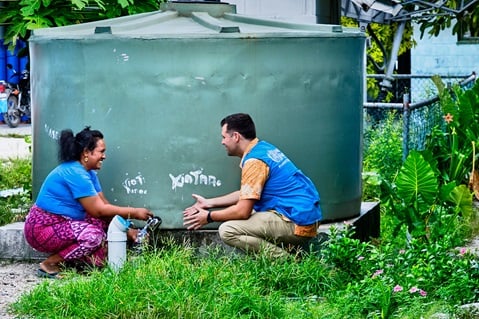



Dispensary inside the health centre section of Wainibokasi Hospital in Fiji.
Antimicrobial resistance
Antimicrobial resistance (AMR) happens when microorganisms (such as bacteria, fungi, viruses, and parasites) change when they are exposed to antimicrobial drugs (such as antibiotics, antifungals, antivirals, antimalarials, and anthelmintics). Microorganisms that develop AMR are sometimes referred to as “superbugs”. As a result, the medicines become ineffective and infections persist in the body, increasing the risk of spread to others. AMR occurs naturally over time, usually through genetic changes. However, the misuse and overuse of antimicrobials is accelerating this process.
Antimicrobial resistance is a complex problem that affects all of society and is driven by many interconnected factors. Single, isolated interventions have limited impact. Coordinated action is required to minimize the emergence and spread of AMR. All countries need national action plans on AMR, and greater innovation and investment are required in research and development of new antimicrobial medicines, vaccines and diagnostic tools.
According to the latest WHO Global Antimicrobial Resistance and Use Surveillance System (GLASS) report, approximately 1 in 6 laboratory-confirmed bacterial infections worldwide were resistant to antibiotics in 2023. Drawing on data from more than 23 million bacteriologically-confirmed infections reported by over 100 countries, the report highlights substantial and often increasing resistance across major pathogens and infection syndromes, with particularly high and uneven levels of resistance among Gram-negative bacteria.
The health and economic consequences of AMR are profound. Recent estimates indicate that bacterial AMR was associated with 4.71 million deaths globally in 2021, including 1.14 million deaths directly attributable to resistance. The AMR burden is expected to increase particularly among older populations. Beyond mortality, AMR leads to longer illness, prolonged hospital stays, higher health-care costs, increased need for expensive second-line treatments, and substantial productivity losses. With the current level of action, the total cost to treat resistant bacterial infections alone is predicted to reach US$ 412 billion annually up to 2035, with additional productivity losses of US$ 443 billion per year.
WHO supports countries and partners through global norms and standards, surveillance, research, technical guidance, capacity building and advocacy to prevent infections, improve access to diagnostics and treatment, promote appropriate use of antimicrobials, and strengthen national responses to AMR.
WHO also promotes research and innovation and works to strengthen learning, workforce capacity, governance and sustainable financing for AMR responses worldwide. The Organization also leads the global surveillance and monitoring of AMR through GLASS, which supports countries in generating and reporting standardized data on antimicrobial resistance and antimicrobial use.
Through collaboration with the Food and Agriculture Organization of the United Nations (FAO), the United Nations Environment Programme (UNEP) and the World Organisation for Animal Health (WOAH), WHO advances a One Health approach to AMR and supports implementation of the Global Action Plan on AMR 2026–2036 and the commitments adopted at the 2024 United Nations High-Level Meeting on AMR.