/59748.tmb-300v.png?sfvrsn=9885965b_2 "For the future - publication thumbnail")
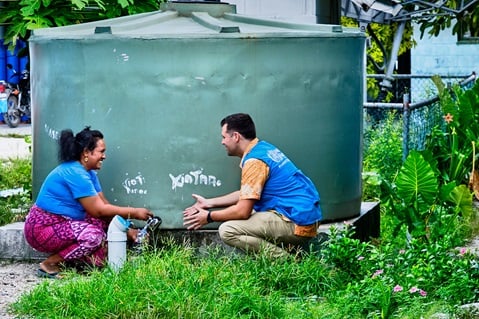
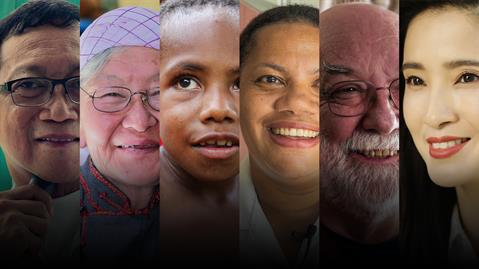
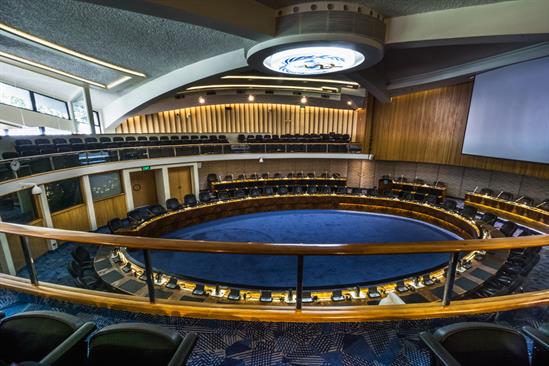
Health emergency leaders from Brunei Darussalam, Indonesia, Malaysia and the Philippines joined counterparts from around the world on 22 and 23 April 2026 for Exercise Polaris II - a multi-country pandemic simulation exercise organized by the World Health Organization (WHO). Over two days, more than 600 health emergency experts from 26 countries and areas, along with 25 partner agencies, tested national health emergency systems, coordination mechanisms and the global architecture that connects them.
Countries participating in Polaris II had the opportunity to evaluate national emergency readiness levels as they responded to a fictional outbreak that had cut across 27 countries and been declared by WHO as a Public Health Emergency of International Concern. Through such simulation exercises, countries are able to identify areas for improvement in their current systems - allowing for proactive measures to be implemented before future emergencies occur.
Polaris II built on country recommendations that emerged from last year’s first global simulation exercise (Polaris I) conducted in April 2025. Efforts to institutionalize pandemic preparedness by regularly testing country readiness have now formalized into a forward-looking, multi-year, multisectoral exercise programme within WHO’s Health Emergencies Programme, HorizonX.
Testing regional coordination and readiness
During the exercise, teams from the Western Pacific Region worked through national incident management activation, assessment of workforce gaps, partner coordination, and calls among global leaders to counterparts around the world.
Brunei Darussalam’s Incident Management Team within the national Centres for Disease Control (CDC) tested airport-linked surveillance and rapid response procedures through Polaris II and subsequently reviewed cross-border traveller monitoring measures with their regional counterparts, including neighbouring countries.
 Caption: Representatives from the Philippine team actively engaging in the Polaris exercise. Photo credit: Yui/WHO
Similarly, Polaris II offered the Health Emergency Management Bureau in the Philippines an opportunity to stress-test real-time intelligence-sharing across borders and make evidence-based decisions while under pressure. “The exercise underscored the need for strong international collaboration, especially in sharing data, best practices and surge support mechanisms,” said Dr Marc Steven Capungcol, Response Division Chief of the Philippine Department of Health, Health Emergency Management Division. “It also highlighted the importance of workforce surge planning, health system resilience, laboratory and surveillance integration, and effective risk communication, particularly in complex settings such as an archipelagic country,” he added.
Malaysia’s team worked from the Ministry of Health’s Crisis Preparedness and Response Centre, testing activation of the national Incident Management System, coordinating with partners in the Association of Southeast Asian Nations (ASEAN), and managing simulated workforce shortages across clinical and laboratory settings.
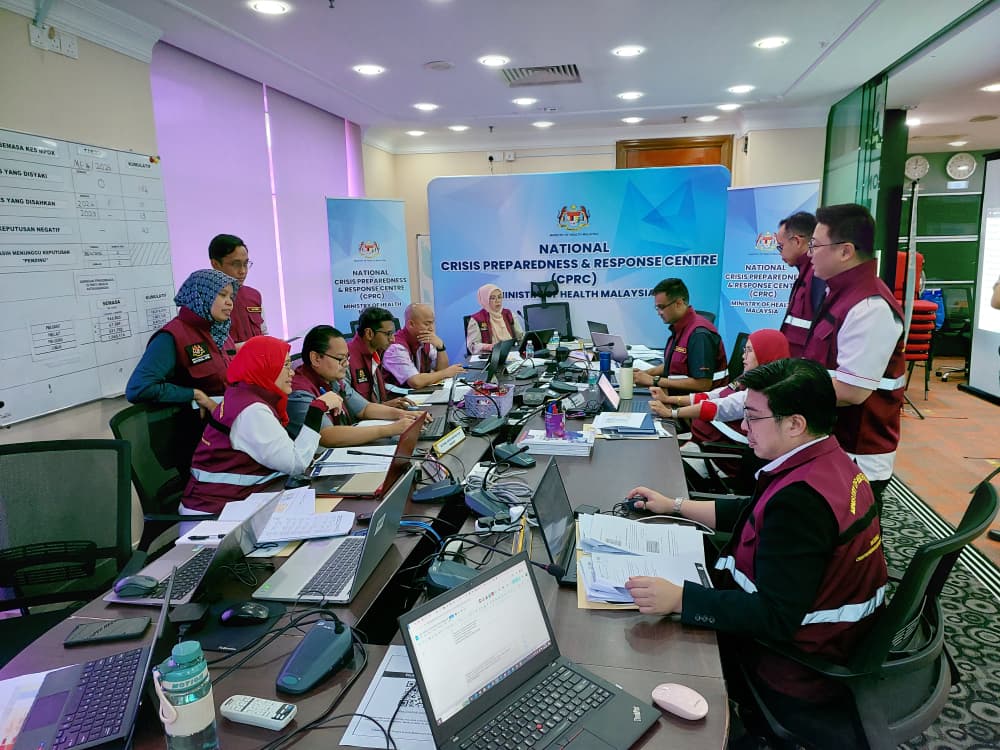 Caption: The Malaysia team participating in Exercise Polaris II from its Crisis Preparedness and Response Centre. Photo credit: Ministry of Health, Malaysia
Datin Dr Harishah binti Talib, Head of the Public Health Emergency Preparedness Sector, Disease Control Division of Malaysia’s Ministry of Health, emphasized the value of this simulation exercise: “Polaris II provided a valuable platform to test our preparedness, particularly in relation to workforce surge, coordination, communication and regional collaboration in responding to a simulated pandemic scenario. The exercise has reaffirmed several important lessons, including the value of continued collaboration, regional solidarity, timely information-sharing, and adherence to recommendations of the International Health Regulations.”
Echoing Dr Talib, Dr Rohani Simanjuntak, Senior Public Health Epidemiologist, Directorate Surveillance and Health Quarantine, Ministry of Health Indonesia, noted: “Polaris has been valuable in strengthening our capacity for detection, risk assessment and response to public health events, including the mobilization of the workforce at subnational, national and international levels, using established in-country mechanisms. Periodic exercise is essential to strengthen countries’ collaboration in addressing global health emergencies”.
Strengthening global emergency response architecture
Beyond country-level activation, Polaris II exercised the coordination mechanisms that link national, regional and global responses. These include the Global Outbreak Alert and Response Network and the WHO Emergency Medical Teams Network. Partner organizations - including the International Federation of Red Cross and Red Crescent Societies, nongovernmental organizations and academic institutions - contributed to a global partner mapping survey used in real time during the exercise to simulate the matching of country surge needs with available partner capacity.
Findings from Polaris II will feed into a consolidated after-action report that will inform national, regional and global preparedness. Participating countries will integrate lessons into their own emergency workforce planning and surge mechanisms, and future Polaris exercises will continue to test how the global health emergency workforce connects and coordinates during evolving events.
By institutionalizing regular, collaborative simulation exercises, the global health community is moving towards a proactive, unified approach to safeguarding lives worldwide.
______
About Exercise Polaris
Exercise Polaris operationalizes two foundational WHO frameworks. The first is the Global Health Emergency Corps, or GHEC, launched in 2023 to strengthen the global network of national health emergency workforces and the coordination mechanisms that connect them. The second is the National Health Emergency Alert and Response Framework, published in 2025, which sets out how countries should structure local, subnational and national response systems for a broad range of health emergencies.
Work under the GHEC Initiative is made possible through support from the Gates Foundation and the Institute of Philanthropy (IoP).