Intra-action review (IAR)
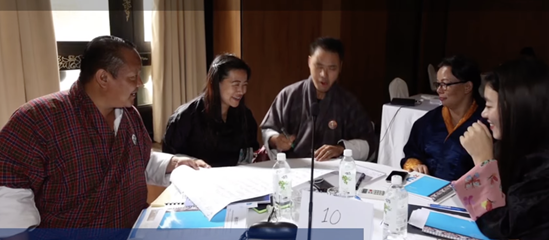
Conducting an IAR during a emergency or a humanitarian crisis is crucial for facilitating real-time course correction, fostering immediate, and sustained learning and improvement within the response systems, allowing countries to continually assess and adapt their strategies. This country-led process enables stakeholders to evaluate the functional capacities of public health and emergency response systems at national or subnational levels during a health emergency or a humanitarian crisis. The aim is to identify best practices, challenges, lessons learned, and propose real-time corrective measures for immediate action or sustained improvement in the outbreak response.
Key Publication
Guidance for Conducting a Country COVID-19 Intra-Action Review (IAR)
The WHO Guidance for Conducting a Country COVID-19 Intra-Action Review (IAR) was developed to guide countries to conduct periodic review(s) of their national and subnational COVID-19 response, so countries do not miss critical opportunities for learning and improvement to better respond to the COVID-19 outbreak in their countries. The IAR is a country-led facilitated process conducted during the COVID-19 outbreak in-country, bringing together a small group of COVID-19 responders with knowledge of the public health response pillars under review. Although IARs can be conducted online or face-to-face, the online format is recommended, especially if community transmission remains high in the country. The IAR will identify practical areas for immediate remediation and sustained improvement of the ongoing response.
Global report on neglected tropical diseases 2026: mid-term evaluation of the road map implementation
Global report on neglected tropical diseases 2026: mid-term evaluation of the road map implementation. Executive summary
Fourth, fifth, sixth and seventh meetings of the WHO Technical Advisory Group on candidate vaccine prioritization (TAG–CVP) for Bundibugyo virus disease outbreak response: Meeting report, 1 September, 19 October, 22 October and 2 November 2026
Digital adaptation kits: implementation facilitation guide
Global benefits and costs of prioritized actions on climate change and health: technical report
A generation missing out: global trends in adolescent physical activity, 2010–2025
WHO consolidated guidelines on tuberculosis: module 3: diagnosis, 2nd ed.
Establishing and operating cancer registries: Resource-adapted guidelines for the context of WHO South-East Asia Region
Catalogue of mutations in Mycobacterium tuberculosis complex and their association with drug resistance, 3rd ed.
WHO/UNICEF guide for research on wasting and nutritional oedema in infants and children under 5 years: a global research priority agenda, guidance on evidence generation and core outcome sets
Regional workshop for strengthening collaboration on phasing out dental amalgam in the WHO South-East Asia Region Bangkok, Thailand, 13-14 July 2026
Public health advice on gender considerations during Ebola disease outbreaks
Tobacco and infertility
Target regimen profiles for long-acting injectables for tuberculosis prevention and treatment
WHO Symposium on Meaningful Engagement of People Living with NCDs, Mental Health and Neurological Conditions
Meeting of the South-East Asia Regional Working Group on Immunization, New Delhi, India, 26 September 2026
A comprehensive integrated review of malaria, leishmaniasis, filariasis and dengue control programmes in Sri Lanka. Report of a WHO mission, 13–20 May 2024
Cupping therapy: descriptive synthesis of training
Priority indicators to monitor the impact of heat exposure on maternal, newborn and child health
21st edition, Epidemiological Bulletin WHO Health Emergencies Programme WHO Regional Office for South-East Asia, 21 October 2026. Reporting period: 5-18 October 2026
COVID-19 IAR Online Training
Global Analysis of COVID-19 IARs
WHO Press Conference
Overview: The Country COVID-19 Intra-Action Review (IAR) is a facilitated process that brings together COVID-19 responders from multiple sectors for experience sharing and collective learning, and it has been modelled after the WHO After Action Review (AAR) methodology. This course provides a general introduction to the management and the facilitation of an IAR during the ongoing COVID-19 pandemic through presentations, quizzes and an assessment at the end of the course to test the knowledge acquired. It targets any individuals or entities involved in the preparedness of and response to the COVID-19 outbreak at the national or subnational levels, including but not limited to Government officials, WHO staff, public health professionals, communities and partners.
In line with the advice and temporary recommendations from the 4th, 5th, 11th and 12th IHR (2005) Emergency Committee on COVID-19, a global analysis of IAR reports received by WHO in collaboration with all six WHO regional offices and country offices has been conducted. A total of 83 reports from 57 countries comprising 2556 best practices, 2366 challenges, and 2859 recommendations were analyzed and triangulated with 27 interviews and 29 survey consultations with countries. This global analysis took a solution-oriented angle aimed at consolidating and showcasing the various strategies adopted by countries to address and overcome common challenges to the COVID-19 response, and to bring these learning to the rest of the world to encourage peer learning.
COVID-19 IAR Toolbox
IAR 14 Tools | 28 April 2021
Tool 5. Trigger question database
Tool 6.b Note-taking template: Pillar 10, COVID-19 vaccination
Tool 7.a Final report template
Tool 7.b Final report template: Pillar 10, COVID-19 vaccination
Tool 8. Participant feedback form
Tool 9. Participant feedback form - summary table
Tool 10. Exemplar story template
Tool 11. Conducting safe onsite COVID-19 intra-action reviews during the pandemic
Tool 12. Conducting effective online COVID-19 intra-action reviews during the pandemic
COVID-19 vaccination IAR
As countries conduct mini COVID-19 vaccine Post-Introduction Evaluation
(mini-cPIE), also called the COVID-19 Vaccination Intra-Action Review
(IAR), to review and adjust their COVID-19 vaccine roll-out, WHO will be
hosting regular clinics for countries to share learnings with peer
countries.
Academic Publications
May 2024 - Sharing lessons learned from COVID-19 vaccine introductions: a global community forum for countries
Sep 2021 - WER - Operationalizing COVID-19 intra-action reviews - preliminary findings
Oct 2020 - The Lancet Global Health - The necessity for intra-action reviews during the COVID-19 pandemic
Country Video Examples
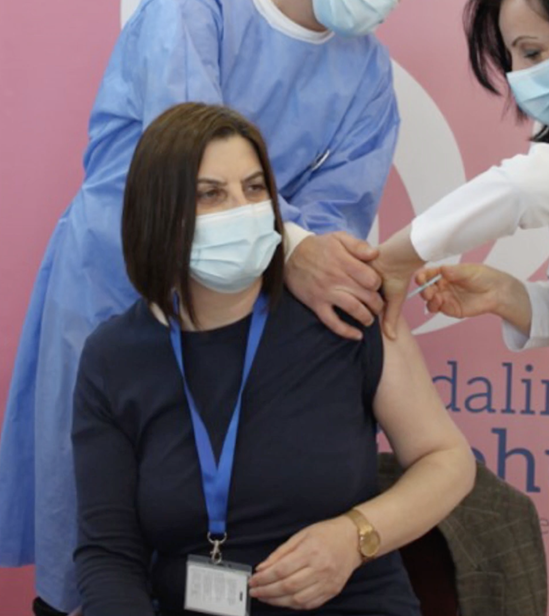
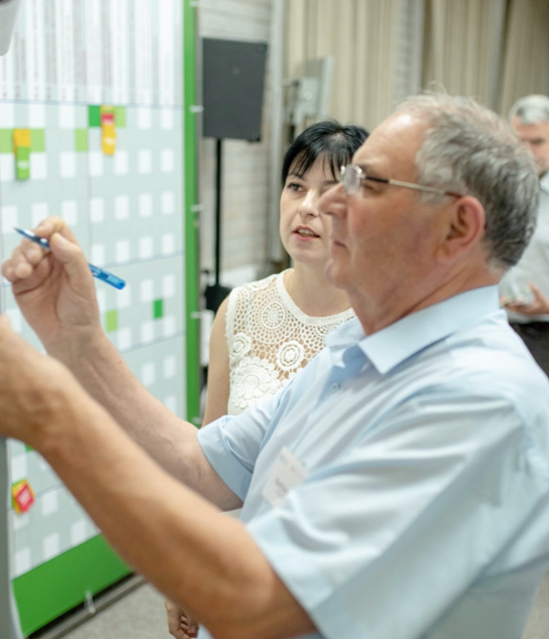

SPH Portal
Contact
Simulation Exercises and Action Reviews (SER) Team
Risk Analytics and Action Reviews (RAR) Unit
Health Emergency Preparedness Department
Email: simexandreviews@who.int